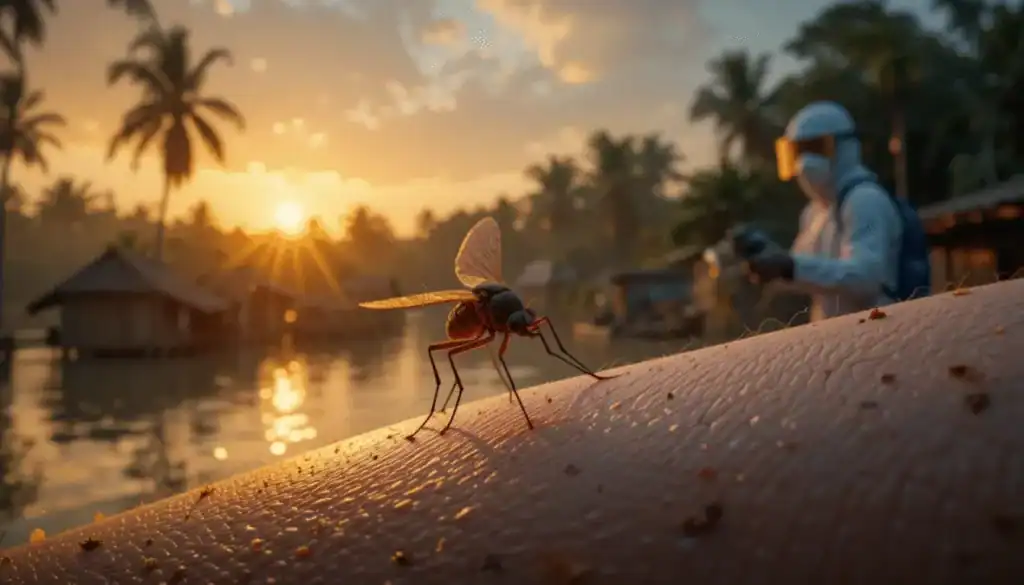

The Nipah virus, once considered a rare zoonotic disease confined to small outbreaks in South and Southeast Asia, has returned in 2025 with alarming intensity. This year’s resurgence — first detected in Kerala, India, and later reported in parts of Bangladesh and Malaysia — has triggered global concern due to its high mortality rate and potential for human-to-human transmission. The 2025 outbreak marks one of the most serious Nipah events in decades, underscoring the urgent need for surveillance, biosafety, and rapid diagnostic infrastructure across the region.
Nipah virus (NiV) is a paramyxovirus belonging to the Henipavirus genus. It is primarily transmitted from fruit bats (Pteropus species) — its natural reservoir — to humans either directly or via intermediate hosts like pigs. However, in the current outbreak, several clusters indicate direct person-to-person transmission, especially among healthcare workers and family members of infected individuals. This shift raises fears that the virus is evolving towards greater transmissibility, similar to early patterns observed in other pandemic-capable pathogens.
⚕️ Clinical Presentation and Pathogenesis
The incubation period ranges from 5 to 14 days, after which patients typically present with fever, headache, sore throat, and myalgia. The disease rapidly progresses to encephalitis, characterized by confusion, seizures, and coma. MRI findings often reveal multiple small lesions in the brain, reflecting severe inflammation and necrosis. Some patients develop respiratory distress, making it difficult to distinguish early Nipah cases from influenza or COVID-like illnesses — a factor that complicates early containment.
The virus’s pathogenesis involves widespread endothelial damage, leading to multi-organ dysfunction. What makes Nipah particularly dangerous is its high case fatality rate (40–75%), depending on healthcare infrastructure and early intervention. There is currently no licensed vaccine or specific antiviral therapy. Treatment remains supportive — managing seizures, maintaining hydration, and preventing secondary infections.
🌍 Outbreak Response and Containment Efforts
In 2025, health authorities in affected regions rapidly enforced containment zones, contact tracing, and quarantine measures. The WHO and CEPI (Coalition for Epidemic Preparedness Innovations) have deployed rapid response teams to assess viral mutations and support local laboratories. Experimental treatments like monoclonal antibodies (m102.4) are being used under emergency authorization, showing promising results in reducing viral load and mortality when administered early.
Meanwhile, researchers are utilizing advanced genomic sequencing to track viral evolution. Early data suggests minor mutations in the G glycoprotein, potentially increasing human cell receptor affinity — a warning sign for public health agencies worldwide.
🧠 Why Nipah Virus Demands Global Attention
Unlike many other zoonotic diseases, Nipah has all the hallmarks of a potential pandemic threat:
- A natural animal reservoir that is hard to control.
- The ability to infect multiple species.
- High human-to-human transmission potential.
- No approved vaccine or antiviral therapy.
Public health experts stress the need for a One Health approach — integrating human, animal, and environmental health strategies to prevent spillover events. Reducing deforestation, controlling bat-pig-human interfaces, and enhancing surveillance in high-risk zones are crucial steps to prevent future outbreaks.
🔬 The Path Forward: Research and Prevention
Recent progress in vaccine research, especially mRNA-based Nipah vaccines, has shown encouraging preclinical results. These candidates aim to generate a strong immune response against the viral fusion (F) and attachment (G) glycoproteins. Global collaboration between institutes like Oxford University, CEPI, and Bharat Biotech is accelerating the process of bringing a vaccine to human trials by late 2025.
Preventive measures remain vital — avoiding raw date palm sap (a known source of bat contamination), limiting animal contact in outbreak zones, and strengthening infection control practices in hospitals. Raising public awareness and combating misinformation also play a critical role in community-level defense.
⚠️ Conclusion
The 2025 Nipah outbreak serves as a stark reminder that even as the world recovers from past pandemics, new viral threats continue to emerge — often from the delicate intersection of wildlife and human activity. The fight against Nipah virus is not just a local issue; it’s a global test of preparedness, unity, and scientific innovation. Early detection, strong international cooperation, and equitable vaccine access will determine how well humanity can face the next inevitable outbreak.