
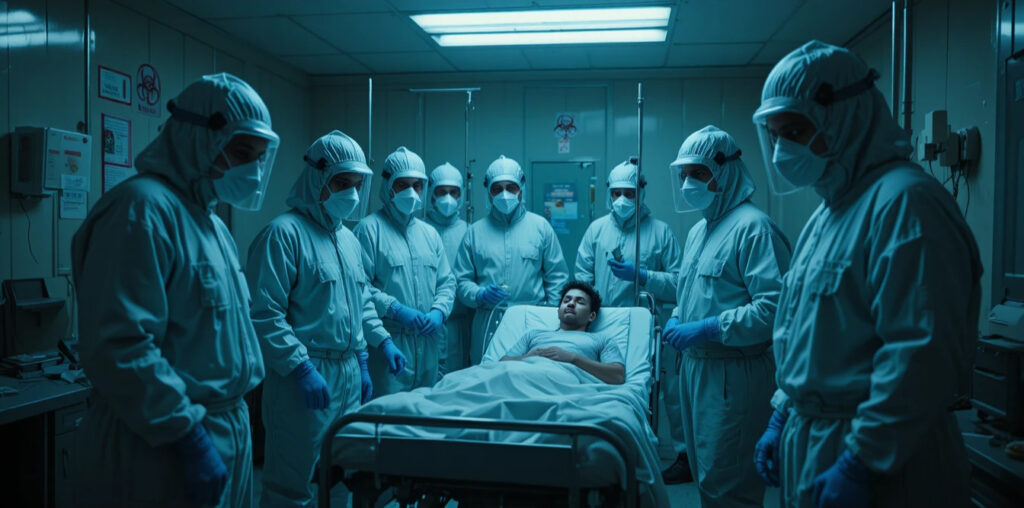
Ebola Outbreak 2025 — The Silent Storm Returns
In early 2025, alarming reports began to surface from the Kasaï Province of the Democratic Republic of Congo (DRC) — a region already known for its dense forests, limited healthcare access, and past viral outbreaks. Within weeks, health authorities confirmed what the world feared most: a new Ebola outbreak, caused by the Zaire ebolavirus strain, one of the deadliest pathogens ever known to humans.
By mid-2025, over 80 confirmed cases and nearly 30 deaths were recorded, though the real toll is believed to be higher due to underreporting in remote areas. The outbreak reignited global concern, testing the preparedness of African health systems and international response teams that had once declared victory over Ebola just a few years ago.
Origins and Spread — A Deadly Chain Reaction
Ebola outbreaks often begin silently, hidden in remote tropical regions where human contact with wild animals is frequent. The virus is believed to originate from fruit bats, which serve as natural reservoirs. Once transmitted to humans—often through contact with infected animal meat (bushmeat)—it spreads rapidly through direct contact with blood, secretions, or other bodily fluids of infected individuals.
In Kasaï, the index case was reportedly linked to a local hunter who presented with fever and bleeding symptoms. Within days, several family members and healthcare workers were infected. Rural traditions of close contact during burial ceremonies further accelerated the transmission.
Health officials soon faced the dual challenge of limited medical infrastructure and cultural resistance. Misinformation and fear spread faster than the virus itself. In some villages, people hid their sick relatives or avoided treatment centers due to rumors that hospitals were “spreading the disease.”
Understanding the Virus — A Master of Evasion
The Zaire ebolavirus is a master of immune evasion. Once it enters the human body, it targets the endothelial cells, immune cells, and liver tissue, causing widespread inflammation and organ failure. The infection triggers a “cytokine storm” — an overwhelming immune response that damages blood vessels, leading to internal bleeding, shock, and multi-organ collapse.
Symptoms usually appear within 2 to 21 days after exposure. The early stage mimics common illnesses like malaria or typhoid, with fever, headache, and muscle pain. But within days, the disease progresses to vomiting, diarrhea, rash, and bleeding from gums or eyes, marking the onset of full-blown viral hemorrhagic fever.
The fatality rate of Ebola can range between 25% and 90%, depending on the viral strain and the quality of care available. In the 2025 outbreak, mortality has remained around 35–40%, thanks to quicker detection and improved supportive care.
The Race to Contain — Global Response in Motion
As soon as the outbreak was confirmed, WHO, Médecins Sans Frontières (MSF), and Africa CDC deployed rapid response teams to affected regions. Mobile labs, isolation centers, and contact tracing units were established. Despite challenging terrain, health workers in full protective hazmat suits moved door-to-door to trace and monitor suspected cases.
The DRC Ministry of Health, supported by international partners, initiated emergency vaccination campaigns using rVSV-ZEBOV, an Ebola vaccine proven effective in past outbreaks. Thousands of frontline workers, close contacts, and high-risk individuals were vaccinated within days.
Still, logistical hurdles persisted — many remote villages could only be reached after long treks or through rivers. Power shortages, lack of refrigeration for vaccines, and local mistrust slowed progress. Yet, despite these barriers, the swift coordination helped contain transmission beyond the epicenter.
Treatment and Hope — Modern Medicine vs. a Deadly Virus
While there is still no universal cure for Ebola, recent medical advances have significantly improved survival rates. Two monoclonal antibody therapies — Inmazeb (REGN-EB3) and Ebanga (mAb114) — have shown promising results, neutralizing the virus and reducing mortality when administered early.
Supportive treatment remains the cornerstone of care:
- Aggressive hydration to replace fluid losses from diarrhea and vomiting
- Oxygen therapy and blood transfusions for organ support
- Electrolyte balance and pain management to maintain stability
In addition, researchers continue to study antiviral drugs and next-generation vaccines that could offer broader and longer protection against multiple Ebola strains.
The 2025 outbreak has thus become a real-world test of scientific preparedness, pushing global health experts to accelerate innovations in viral diagnostics, genomic surveillance, and portable vaccine technologies.
Beyond the Virus — The Human Side of the Crisis
Ebola is not just a biological threat — it’s a humanitarian one. Every outbreak devastates communities already struggling with poverty, displacement, and fragile healthcare systems. Families lose breadwinners, children are orphaned, and survivors often face stigma and psychological trauma.
Healthcare workers — the heroes on the front lines — endure unimaginable stress. Many risk their lives daily, wearing heavy protective suits under intense heat, treating patients who may not even believe the virus is real. Some contract the infection despite precautions.
Local journalists, educators, and volunteers play an equally crucial role in combating misinformation, encouraging people to seek early medical help, and promoting vaccination. Their work ensures that the message of prevention reaches even the most isolated communities.
Lessons from the 2025 Outbreak
The Kasaï outbreak has reignited several lessons from past epidemics:
- Preparedness saves lives: Rapid detection, isolation, and communication can prevent widespread transmission.
- Community trust is essential: Without local cooperation, even the best medical interventions fail.
- Global solidarity is non-negotiable: Outbreaks anywhere are a threat everywhere.
Health experts emphasize that Ebola is not just Africa’s problem — it’s a global health security concern. Every epidemic serves as a reminder that the world must continue investing in research, healthcare infrastructure, and emergency response systems to prevent another global catastrophe.
Conclusion — The Unfinished Battle
The 2025 Ebola outbreak in DRC is more than a regional crisis; it is a wake-up call for the entire world. As nations focus on post-pandemic recovery, diseases like Ebola remind us that nature’s threats are far from over. Vigilance, empathy, and scientific advancement remain our strongest weapons.
While the outbreak shows early signs of control, the virus still lurks in the shadows of Africa’s rainforests — unpredictable and unforgiving. Humanity’s response today will define how well we face the next viral storm tomorrow.